The One-Person LLC With No Subscriptions: 60 Days on a Fully Open-Source Back Office

Every solo operator in the US gets the same pitch around month three: a $29-a-month bundle that handles invoicing, books, contacts, and files, all in one login. It is genuinely convenient. It is also $348 a year before you have invoiced a single client. So we ran the opposite experiment for 60 days: one mini PC, four open-source apps, zero recurring software charges.
The stack and the hardware
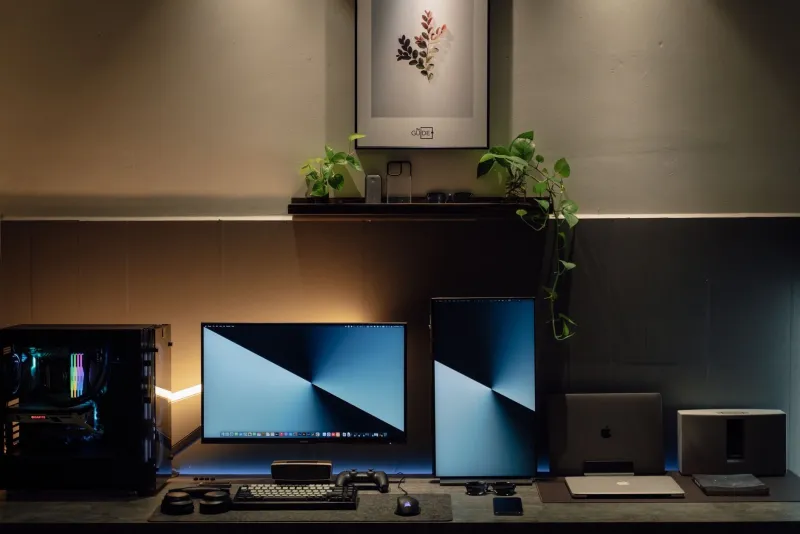
We used a used mini PC we already had (8GB RAM, 256GB NVMe), running Debian 12 with Docker Compose. Total hardware cost if you were buying today: about $180. A domain came to $12 for the year. Power draw measured 8W idle, which works out to roughly $1 a month at typical US rates.
The applications:
- Invoice Ninja for invoices, estimates, and recurring billing
- Akaunting for double-entry bookkeeping
- EspoCRM for contacts, deals, and a lightweight sales pipeline
- Nextcloud for document storage and client file sharing
All four are self-hosted and all four have free tiers that are actually usable, not trial-ware. That is the important part. Plenty of open-source business tools gate the useful features behind a hosted plan. These four mostly do not.
Week one: the setup tax
Here is the number everyone leaves out of the open-source pitch. Getting all four apps running took 14 hours across the first four evenings, and roughly half of that was not the apps at all. It was reverse proxy config, TLS certificates, DNS records, and figuring out why Nextcloud's upload limit was silently capping at 2MB.
None of it was hard. All of it was unfamiliar, and unfamiliar takes time.
If you have never run Docker, budget a full weekend and expect to be annoyed. If you have, an afternoon is realistic. Either way, this is a one-time cost and it is the single biggest argument in the open-source column.
A quick security note, because this is the mistake people make: we did not expose any of these to the open internet. The mini PC sits behind the router, and we reach everything over WireGuard. If you are going to self-host business data, a VPN is not optional and a port-forward is not a plan.
Invoice Ninja: the surprise winner
We expected this to be the weak link and it turned out to be the strongest piece of the stack.
Invoicing worked cleanly from day one. Recurring invoices, partial payments, and client portal links all behaved. PDF output looked professional after about twenty minutes of template tweaking, and it did not have a watermark or a nag screen, which is more than we can say for several commercial tools.
Stripe and PayPal both connected without drama. Payments landed in the app and reconciled against invoices automatically.
The rough edges: the free tier's client portal lives on your domain and your uptime, so when your mini PC reboots during a Windows-style patch cycle, so does your client's payment link. And US sales tax handling exists, but it is a rate table you maintain, not a service that tells you when you have crossed an economic nexus threshold in another state. If you sell physical goods across state lines, do not treat this as a tax engine.
Akaunting: bookkeeping that respects double entry
Akaunting is real double-entry accounting, not a spreadsheet with a logo. Chart of accounts, journal entries, reconciliation, and a decent set of reports. It imported four months of bank CSV files and matched most transactions automatically after we set up rules for repeat vendors.
The friction is everything downstream of the ledger. There is no clean handoff to a CPA. Our accountant wanted a trial balance and a general ledger export, and we ended up walking her through the CSV exports over a screen share. A commercial product would have had a shared accountant seat and an invite link.
The other gotcha is the app ecosystem. Several of the modules a US business actually wants, like deeper payroll integration or 1099 preparation, live in paid modules. You can run Akaunting for free forever. You cannot run a full US tax workflow in it for free.
EspoCRM: right-sized, slightly boring, in a good way
EspoCRM handles contacts, accounts, deals, and activities, and it does it with a UI that looks like 2014 and works like it too, which is to say predictably. For a one-person shop tracking a dozen opportunities this is plenty. Setup took under two hours including importing contacts.
The honest assessment: if you are a solo consultant, EspoCRM is more CRM than you need. If you are running any kind of pipeline, it is exactly enough and it does not charge you per seat for the privilege of adding a virtual assistant.
Nextcloud: great storage, annoying defaults
File storage was the least interesting part of the experiment and the one that ate the most time. Once we set upload limits, background job mode, and a sane retention policy for file versions, it was rock solid. Client file drops worked. Sharing links with passwords worked. The desktop sync client worked on Windows and Mac.
The trap is wanting document editing inside it. Collabora and Nextcloud Office are excellent and they are also the point where the free stack starts demanding RAM you do not have on an 8GB mini PC. We edited locally and uploaded. That was fine.
The backup discipline nobody wants to hear about
Self-hosting means you are the disaster recovery plan. We ran nightly restic backups of all four app databases and their data directories to an external USB drive, plus a weekly encrypted copy to cheap object storage that costs about $2 a month.
We tested a restore on day 34. It failed the first time because we had forgotten to include the Nextcloud app secret, which meant every stored password for external storage was garbage. That is exactly the kind of thing that only surfaces during a drill, and exactly why you run one before you need it.
The break-even math
Recurring costs for the open-source stack over 60 days:
- Domain: $12 a year, so $2 for the period
- Object storage backup target: $4 for the period
- Power: about $2
- Total: roughly $8
Recurring costs for a $30 a month SaaS bundle over the same 60 days: $60.
So the software side saved about $52 in two months against a $180 hardware buy-in. On that math alone, break-even lands around seven months, and after that you are genuinely ahead on cash.
Now the honest column. Setup and maintenance across 60 days came to 26 hours. That includes the 14-hour build, weekly patch windows, two backup investigations, and the CPA screen share. Value that time at even $25 an hour and you have spent $650 on labor to avoid $52 of subscriptions.
Which means the real answer depends entirely on one question: are you self-hosting because you enjoy it and want to own your data, or because you are trying to spend less money? If it is the first, this stack is great and you will love it. If it is the second, a $30 bundle is cheaper than your time and you should buy it without guilt.
Tax-season gotchas for US solo operators
The software will not save you here. A few things to plan for before January:
- Quarterly estimated taxes are still on you. Neither Akaunting nor Invoice Ninja will remind you, so put the dates in your calendar and set aside the cash.
- If you pay contractors $600 or more, you owe them a 1099-NEC. Akaunting can produce the payment totals but the form filing is manual or a paid add-on.
- Sales tax nexus rules vary by state and change. Self-hosted tools track what you tell them to track. They do not know when you crossed a threshold.
- Your CPA wants a general ledger and a trial balance, not a login. Export both to PDF monthly and keep them somewhere that is not your mini PC.
The verdict after 60 days
We are keeping the stack, with one change: Nextcloud moves to a bigger box next quarter because 8GB is not enough once you add a database, four web apps, and a backup job.
The subscription-free back office is real and it works. It just is not free. You are paying in setup hours, in maintenance Saturdays, and in the mental load of being your own sysadmin. For a solo US LLC that wants to own its data and has the patience for a weekend of Docker, that trade is very much worth it. For everyone else, the $30 bundle is a fair price for someone else carrying the pager.